
Which Young Justice Character Are You?
Which Young Justice Character Are You?
Learn More About Young Justice
Young Justice arrived on Cartoon Network in November 2010 and immediately set itself apart from the superhero cartoons around it. Created by Greg Weisman and Brandon Vietti, it took the premise of a junior team — sidekicks tired of being sidekicks — and treated it as an espionage drama rather than a monster-of-the-week show. The team is not a junior Justice League. It is the League’s covert operations unit, and it is made up of teenagers.
That framing changes everything. Missions involve infiltration, deniability and intelligence gathering, and the consequences carry forward. The first season builds a season-long conspiracy involving mind control and a shadow organisation called the Light, and it plays fair with the audience the whole way. Plot threads planted in episode two pay off fifteen episodes later. Very little is explained twice.
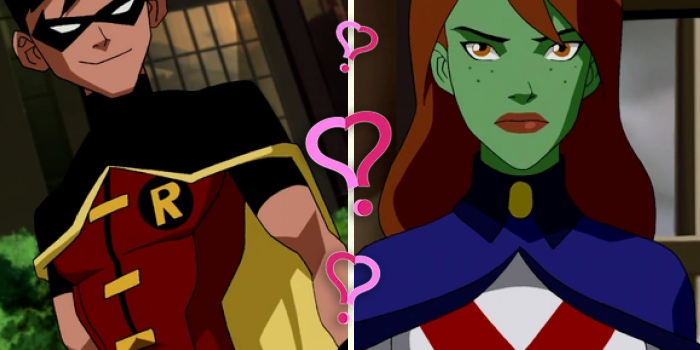
The core team was assembled from DC’s deep bench rather than its obvious picks. Dick Grayson’s Robin is the strategist. Kaldur'ahm — Aqualad, a character created for the show who was popular enough to migrate into the comics — is the reluctant field leader. Conner Kent is Superboy, a clone with Superman’s power, none of his upbringing, and a great deal of unprocessed rage about it. M'gann M'orzz is Miss Martian, hiding more about herself than anyone guesses. Artemis Crock is the archer with a family tree full of supervillains. Wally West’s Kid Flash rounds out the original six.
The show’s boldest decision came with season two. Young Justice: Invasion jumped forward five years, aged the cast, expanded the roster and asked the audience to reconstruct what had happened in the gap from context alone. Characters had broken up, retired, died and changed sides off screen. It is a structural risk almost no children’s programming would take, and it gave the series a genuine sense of a world moving whether or not you were watching.
Cartoon Network cancelled it in 2013 anyway, reportedly over merchandising performance rather than ratings, and the fan campaign that followed became one of the more famous revival efforts of the streaming era. Strong viewing numbers on Netflix eventually convinced Warner Bros. to order season three, Outsiders, which arrived on the DC Universe service in 2019, followed by Phantoms in 2021. The later seasons leaned harder into serialised, ensemble-wide storytelling and tackled subject matter — grief, trafficking, identity, recovery — well beyond what the original time slot would have allowed.
What has kept the fandom intense across a fifteen-year run is the writing’s refusal to simplify. The villains have coherent long-term plans. Relationships develop and fall apart for ordinary reasons. Characters make bad calls and live with them. Kaldur'ahm's season-two arc in particular is a genuinely harrowing piece of undercover storytelling that would not be out of place in an adult drama.
The series remains in limbo after Phantoms, with the creators open about wanting more and the future tied up in the broader reorganisation of DC’s screen output. For a show that was cancelled once and came back anyway, that is a familiar position for its fans to be in.
More capes and teams: try Which Teen Titans Character Are You? or test your dark side with Which Batman Villain Are You?