
Which Coco Character Are You?
Which Coco Character Are You?
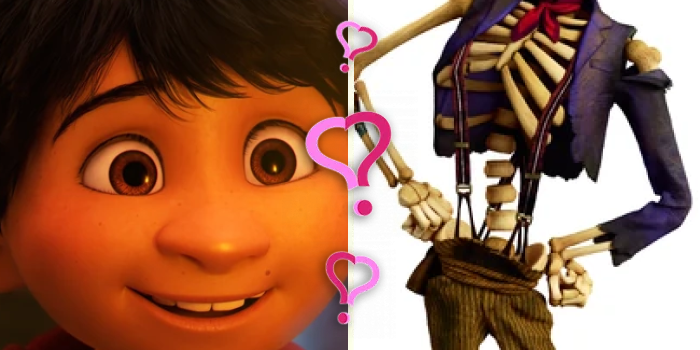
Learn More About Coco
Pixar's Coco opened in 2017 and did something the studio had not quite managed before: it built an entire film around a specific living culture and got the details right enough that the culture embraced it back. The film became the highest-grossing film in Mexican box office history, won Academy Awards for Best Animated Feature and Best Original Song, and has since become a fixture of Dia de los Muertos celebrations well beyond Mexico.
The story follows Miguel Rivera, a twelve-year-old boy in the fictional village of Santa Cecilia who desperately wants to be a musician. The problem is his family, which has banned music entirely for four generations, ever since his great-great-grandfather walked out on his wife Imelda to pursue a career and never came back. Imelda took up shoemaking, forbade music in the house, and the prohibition calcified into family law. On Dia de los Muertos, Miguel steals a guitar from the tomb of the famous musician he believes is his ancestor and finds himself pulled into the Land of the Dead.
Director Lee Unkrich and co-director Adrian Molina spent years on research trips through Mexico, and Pixar assembled a cultural consultancy team after an early misstep, an attempt to trademark the phrase Dia de los Muertos, drew justified backlash. The film that resulted is meticulous about the things that matter: the ofrenda and the marigold petals, the papel picado, the alebrijes as spirit guides, the specific texture of a multigenerational household where the abuelita is unambiguously in charge.
The central conceit is where the film gets its emotional power. In the Land of the Dead, you persist only as long as someone among the living remembers you. When the last person who knew you forgets, you experience what the film calls the final death and simply blink out. This is a startlingly heavy idea for a family film, and Coco does not blunt it. Hector, a shabby trickster desperate to cross the marigold bridge before his daughter forgets his face, is the character in whom the whole thesis lives.
The song Remember Me does an enormous amount of structural work. It is introduced as a bombastic stadium number, repeated as a cynical performance, and finally revealed as what it always was, a lullaby a father sang to a small daughter before he left and could not return. The film lands its ending on that reversal, with an elderly Coco quietly joining in, and it is one of the few animated sequences that reliably reduces entire theaters to silence.
The film is also unusually clear-eyed about family. It does not pretend the Rivera family is simply right or simply wrong. Their ban on music is genuinely unjust and comes from genuine abandonment. Imelda is unreasonable and also justified. The resolution does not require anyone to have been secretly correct all along, only for the truth to come out and for people to adjust.
Ernesto de la Cruz deserves a mention as one of Pixar's more effective villains, a beloved public figure whose entire legend is stolen, and whose charm never once slips even when the theft is laid bare. He is a study in how completely a good performance can substitute for a good character.
If Coco is your speed, try Which Encanto Character Are You? for another film built around a complicated family, or Which Toy Story 5 Character Are You? for more Pixar.