
Which Inside Out Character Are You?
Which Inside Out Character Are You?
Learn More About Inside Out
When Pixar released Inside Out in 2015, it was taking a genuine risk. The premise, that the inside of an eleven-year-old girl's head is staffed by five personified emotions running a control console, could easily have collapsed into gimmick. Instead, director Pete Docter and his team produced what many critics still consider the studio's finest hour, a film that treats the emotional life of a child with more seriousness than most films aimed at adults manage.
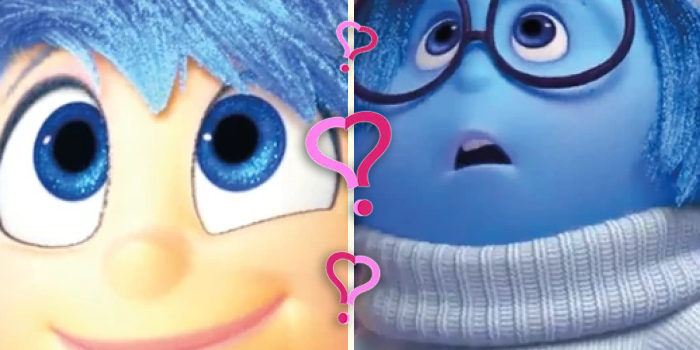
The setup is straightforward. Riley Andersen is uprooted from Minnesota to San Francisco, and the upheaval throws her internal world into crisis. Joy, who has run Riley's head since infancy on the assumption that her job is to keep Riley happy, finds herself stranded in long-term memory alongside Sadness, the emotion she understands least and trusts not at all. Their journey back to headquarters is the plot. The actual story is Joy learning that she has been wrong about what Riley needs.
That thesis is what elevated the film. Most children's media treats sadness as a problem to be solved. Inside Out argues the opposite, that sadness is a social signal, the thing that calls other people toward you and makes connection possible, and that a childhood of enforced cheerfulness is a childhood without depth. The scene where Sadness sits with Bing Bong rather than trying to cheer him up has been cited by therapists and shared endlessly as a plain illustration of what empathy actually looks like.
Pixar consulted psychologists Paul Ekman and Dacher Keltner while developing the film, which shows in the details. The core emotions map loosely onto Ekman's research on universal facial expressions. The film's handling of memory consolidation, the fading of unused memories, and the way core memories shape identity are simplifications rather than fabrications. Keltner has said publicly that the filmmakers were genuinely interested in getting the science defensible rather than merely plausible.
The 2024 sequel, Inside Out 2, raised the stakes by aging Riley into puberty and introducing a new set of emotions led by Anxiety. It became the highest-grossing animated film of all time, and Anxiety in particular struck a nerve. She is not a villain. She is trying very hard to protect Riley from futures that have not happened, and the film's climactic panic-attack sequence, rendered as a shuddering orange storm at the console, was widely praised for depicting the experience with uncommon accuracy.
Part of what makes the emotions work as characters is that none of them is dispensable. Anger gets results when a boundary needs defending. Fear keeps Riley alive crossing the street. Disgust handles social risk. Even Anxiety, at her most overbearing, is running legitimate threat assessment. The films consistently refuse the easy move of designating one emotion the problem, which is precisely why the quiz question of which one you are has a real answer rather than a flattering one.
The voice work anchors all of it. Amy Poehler's Joy is relentless in a way that slowly reveals itself as anxious rather than sunny. Phyllis Smith gives Sadness a deflated warmth that makes her impossible to dislike. Lewis Black as Anger and Maya Hawke as Anxiety both land characters that could have been one-note and are not.
Curious which voice at your own console does the most talking? If you like this one, try Which Toy Story 5 Character Are You?, Which Encanto Character Are You?, or Which Zootopia 2 Character Are You?.