
Which You and I Are Polar Opposites Character Are You?
Which You and I Are Polar Opposites Character Are You?
Learn More About You and I Are Polar Opposites
You and I Are Polar Opposites began as a manga by Koucha Agasawa, serialised on Shueishas Shonen Jump+ platform, and it belongs to a very specific and very beloved corner of romance storytelling: the one where the confession happens early and the story is about everything that comes after. Most romance manga treat getting together as the finish line. This one treats it as chapter one, and then spends its length on the far more interesting question of how two people who process the world completely differently actually build something together.
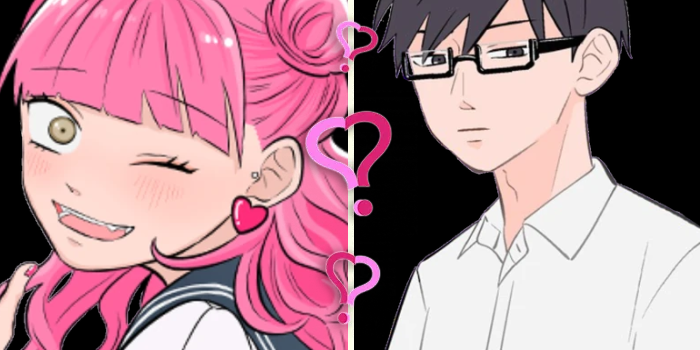
Miyu Suzuki is loud, bright, socially anxious in a way that expresses itself as constant motion, and utterly unable to keep a feeling to herself. Yuusuke Tani is quiet, blunt, and emotionally unreadable to almost everyone he says exactly what he means in as few words as possible, which reads as cold until you realise he has never once lied to soften a landing. Suzuki falls for him hard, confesses, and to her genuine shock he says yes. He liked her too. He simply had no framework for mentioning it.
The anime adaptation arrived in 2026 and has been one of the seasons quiet word-of-mouth successes, precisely because it refuses the usual engine of romance drama. There is no love triangle, no misunderstanding stretched across ten episodes, no rival who exists to manufacture tension. The conflict is entirely internal and entirely recognisable: Suzuki cannot tell whether Tani is bored or content, Tani cannot tell whether his honesty is landing as reassurance or rejection, and both of them are trying very hard in ways the other cannot see.
The supporting cast carries a surprising amount of the shows warmth. Natsumi Nishi, Suzukis friend, is bright and outwardly confident while quietly managing a lot of insecurity about how she is perceived. Kentaro Yamada takes specific pleasure in getting a laugh out of people who do not laugh easily, which is how he ends up circling Nishi. Azuma Shino overthinks looking cool in front of others to the point of paralysis, and Shuji Taira is a cynical convenience-store part-timer whose self-deprecation is funny right up to the moment it stops being a joke. Their parallel storylines are not filler; they are variations on the same theme.
What people respond to most is the honesty about communication. Tani is not a stoic archetype who will eventually be melted by love. He is a person with a flat affect who has to learn that his girlfriend needs words, and Suzuki is not a manic pixie who fixes him. She has to learn that his version of I love you looks like remembering something she mentioned once. Both of them do actual work.
It has also drawn praise for how gently it handles teenage self-consciousness. Nobody in this story is punished for being awkward. The comedy comes from recognition rather than humiliation, which is a much harder tone to hold for twelve episodes than it sounds.
If you want more romance and slice-of-life picks, try Which Blue Box Character Are You?, Which Rent-a-Girlfriend Character Are You?, or Which Grand Blue Character Are You?