
Which Shangri-La Frontier Character Are You?
Which Shangri-La Frontier Character Are You?
Learn More About Shangri-La Frontier
Shangri-La Frontier built its audience on a joke that turned into a thesis. Rakuro Hizutome is a teenager who has made a hobby — arguably a career — out of playing deliberately terrible video games. Broken hitboxes, nonsense translations, physics that give up halfway through a jump: he clears them all, and he has become genuinely, unusually good at reading a game’s intentions in the process. Then he picks up Shangri-La Frontier, a god-tier full-dive VRMMO, and all that garbage-game instinct turns out to be an absurdly powerful toolkit.
Ryosuke Fuji’s manga, adapted by C2C, is one of the rare gaming anime that actually feels like it was made by someone who plays games. The series is obsessed with the texture of play: reading enemy tells, abusing terrain, grinding a single technique for hours because it will matter in twenty minutes, and the very specific joy of beating a boss that was clearly not designed to be beaten the way you beat it. Sunraku — Rakuro’s in-game handle — does not win because he is chosen. He wins because he has watched the fight forty times and finally noticed the wind-up.
That focus on process is why the show landed so hard. Its most famous early sequence, the fight against Lycagon the Nightslayer, is essentially a long montage of failure, and it is thrilling precisely because the series refuses to skip the part where the protagonist is bad at something. The anime treats death and retries as content rather than shame, which is a much more honest depiction of how people actually play.
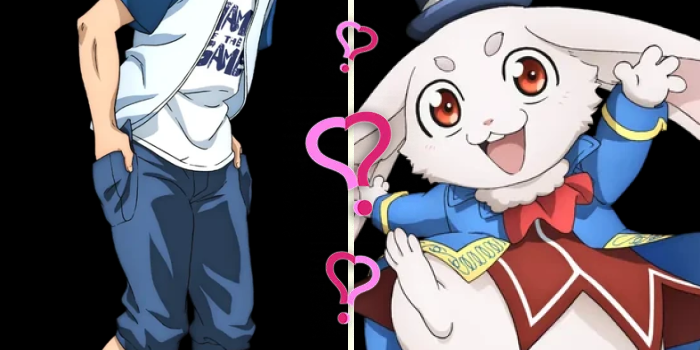
The party around him is what keeps it from being a solo power fantasy. Emul, the rabbit-eared NPC bound to Sunraku as a guide, is the emotional anchor and a running reminder that the game’s world has its own stakes. Pencilgon is the sharp, competitive friend who treats optimisation as a personality and is very rarely wrong. Oicazzo and Katzo, Rakuro’s real-world friends, bring the easy, unglamorous chemistry of people who have been arguing about games together since middle school.
The show is also unusually generous toward its NPCs. In a lot of VRMMO fiction, non-player characters exist to hand out quests. Here they have interiority, grief, and long memories, and the question of whether Sunraku is playing a game or intervening in a world is a live one. It gives the grind a moral weight that the genre usually skips.
By its third season the series had settled into a comfortable rhythm: enormous, intricate boss encounters; a protagonist whose main superpower is refusing to be bored; and a running argument about whether being good at a game is a skill or a symptom. The animation has drawn its share of debate, but the fight choreography — which has to read as both spectacle and legible game mechanics — remains some of the most inventive in the genre.
If you like anime where the protagonist earns it through preparation, the closest cousins on the site are Solo Leveling, which trades grind for escalation, and Zenshu, another series built around someone using meta-knowledge inside a world they should not understand. For something with a similar sense of chaotic fun, Dandadan is a good next click.
So are you the one who breaks the game, the one who optimises it, the one who is just here for the group chat, or the one who lives in it? Take the quiz above and find out which Shangri-La Frontier character you are.