
Which Spirited Away Character Are You?
Which Spirited Away Character Are You?
Learn More About Spirited Away
Hayao Miyazaki's Spirited Away premiered in Japan in 2001 and became, almost immediately, one of the most decorated animated films ever made. It won the Academy Award for Best Animated Feature, took the Golden Bear at Berlin, and held the record as Japan's highest-grossing film for nearly two decades. It routinely appears near the top of critics' lists of the greatest films of the century, animated or otherwise.
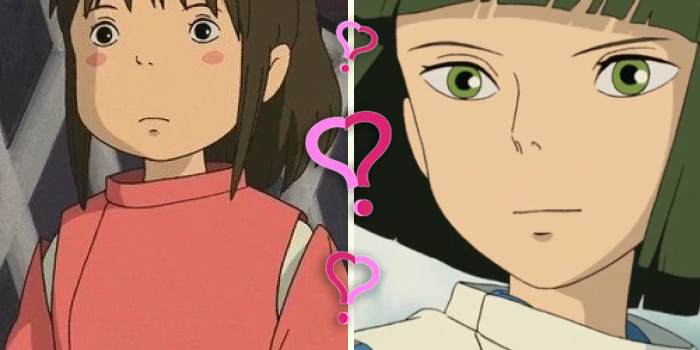
The story follows Chihiro Ogino, a sullen ten-year-old being dragged to a new town she does not want to live in. Her parents detour into what looks like an abandoned theme park, eat food that was not offered to them, and are turned into pigs. Chihiro is left alone in a world of spirits, and to survive she takes work at a bathhouse run by the witch Yubaba, who steals her name and rechristens her Sen. Getting her name back, and her parents, is the whole of the plot.
Miyazaki has said he made the film for a group of young girls he knew, frustrated that films aimed at ten-year-old girls offered them only romance or rescue. Chihiro is not special. She has no hidden powers, no prophecy, no particular talent. What she has is the willingness to work hard, be polite to strange beings, and keep her promises, and the film insists throughout that this is enough. Her transformation from a whining child into someone competent and calm happens entirely through labor and attention.
The world she moves through is one of the great achievements in animation. The bathhouse is dense with incidental detail, populated by radish spirits and soot sprites and a stink god whose cleansing is one of the film's best sequences. Miyazaki drew on Shinto ideas of kami inhabiting objects and places, and the result feels less invented than observed. Nothing is explained, which is precisely why it works.
No-Face has become the film's most recognizable figure, and he is frequently misread as a villain. He is closer to a mirror. Lonely and formless, he absorbs whatever is around him, and in a bathhouse driven by greed he becomes greedy and monstrous. Removed from that environment and treated with simple kindness, he settles into something gentle. The film's argument is that appetite is contagious and so is decency.
Themes of environmental damage run underneath everything. The stink god turns out to be a polluted river spirit choked with bicycles and refuse. Haku cannot remember his own name because the river he was has been paved over. Yubaba's bathhouse runs on extraction and contracts that strip workers of their identities, an image of consumer capitalism that Miyazaki has never been shy about naming.
Joe Hisaishi's score is inseparable from the film's reputation. The piano theme One Summer's Day has taken on a life of its own, and the sequence where Chihiro rides a train across flooded plains beside silent shadow passengers, scored with restraint and almost no dialogue, is regularly cited as one of the most beautiful stretches in any animated film.
Still in a Ghibli mood? Try Which Studio Ghibli Character Are You? for the wider studio, or head elsewhere in animation with Which Toy Story 5 Character Are You?.