
Which Interview with the Vampire Character Are You?
Which Interview with the Vampire Character Are You?
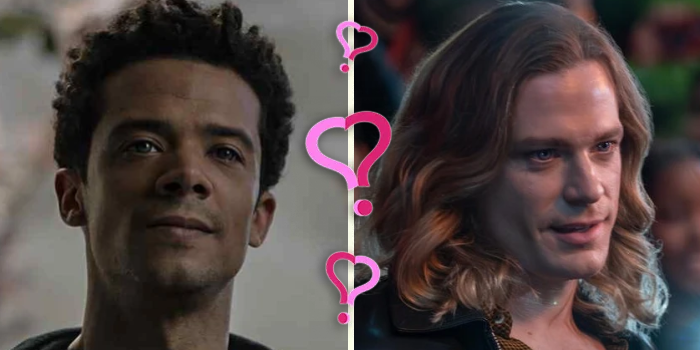
Learn More About Interview with the Vampire
AMC's Interview with the Vampire takes Anne Rice's gothic novel and turns it into one of the most acclaimed literary adaptations on television, largely by refusing to sand down anything uncomfortable about its central relationship. At its core is Louis de Pointe du Lac, decades after his transformation, finally agreeing to tell his real story to journalist Daniel Molloy, after a disastrous first interview decades earlier that Louis has spent his immortal life regretting.
Louis is a man perpetually at war with himself: a Black entrepreneur in early twentieth-century New Orleans navigating a racist society, he is seduced into vampirism by Lestat de Lioncourt and spends much of the show negotiating the horror of what he has become against his desperate need for connection and meaning. His guilt is constant, and it is also, the show suggests, a kind of self-indulgence he uses instead of actually changing anything.
Lestat is one of television's great impossible romantic leads: magnetic, cruel, generous, jealous, and genuinely loving in ways that are almost always also acts of control. He wants Louis entirely, and the show never lets the audience settle into either loving or hating him, which is the point. Their relationship is the show's real subject, a study of how love and abuse can occupy the same body at once.
Claudia, transformed into a vampire as a child and trapped in that body for decades, is the show's most devastating creation. Her fury is not really about being a vampire, it is about having every choice, including the choice to grow up, permanently stolen from her by the two men who claim to love her most. Armand, meanwhile, enters later as an ancient, serene-seeming vampire whose calm exterior conceals an obsessive need to be needed, and whose manipulations reframe much of what the audience thought they understood about Louis's story.
Holding it all together is Daniel Molloy, the journalist whose skepticism and sharp tongue make him the audience's proxy inside the interview itself. His refusal to simply accept Louis's narrative at face value is what turns the show's framing device into something genuinely tense, an interrogation as much as an interview.
If gothic, morally tangled romance dressed up in horror is your thing, you will probably also enjoy sorting yourself into Practical Magic or the equally dreamlike world of The Sandman.
Take the quiz above to find out which member of this beautiful, doomed household you actually are.
The show also plays with time in a way the original novel only gestures at, cutting between Louis's memories and his present-day interview with Daniel decades later, which lets the story question its own reliability at almost every turn. Louis openly revises details as he tells them, and the show dramatizes those revisions on screen, turning memory itself into one of its central themes.
Since its debut, the series has been widely praised for deepening Anne Rice's source material rather than simply adapting it, expanding on race, colonialism, and queerness in ways the original novels only touched on. That willingness to go further than the books is a big part of why it is considered one of the strongest literary adaptations on television right now.