
Which Fullmetal Alchemist Character Are You?
Which Fullmetal Alchemist Character Are You?
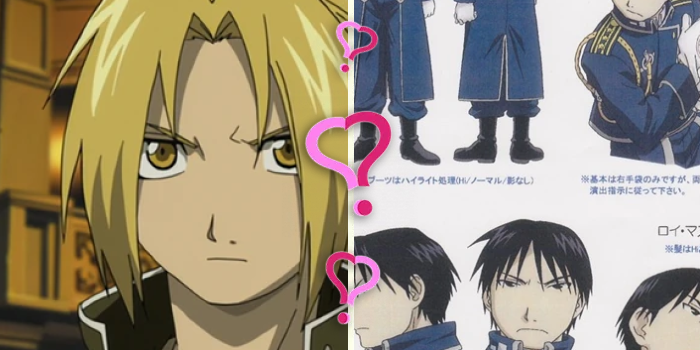
Learn More About Fullmetal Alchemist
Ask a room full of anime fans to name the greatest series ever made and Fullmetal Alchemist will be in the conversation within about four seconds. It has held that position for the better part of two decades, and it has done so despite — or arguably because of — the unusual fact that it exists in two substantially different animated versions, both of which have passionate defenders.
Hiromu Arakawa's manga ran from 2001 to 2010 and established the premise that makes the whole thing work: alchemy operates on the law of equivalent exchange, meaning nothing can be created without giving up something of equal value. Two brothers, Edward and Alphonse Elric, break the single greatest taboo in that system when they attempt to bring their dead mother back. The attempt fails catastrophically. Edward loses an arm and a leg; Alphonse loses his entire body, and Edward binds his brother's soul to a suit of armor to save him. Everything that follows is an attempt to undo that afternoon.
The 2003 anime caught up to the still-running manga partway through and diverged into an original ending, producing a darker, bleaker, more tragic story that has its own devoted following. Fullmetal Alchemist: Brotherhood, which aired from 2009 to 2010, restarted from the beginning and followed Arakawa's completed plot to its actual conclusion. Brotherhood is the version most commonly recommended to newcomers, and for years it sat at or near the top of the MyAnimeList rankings — an unusual feat for a shonen series in a field that tends to reward novelty.
What elevates it above the standard adventure structure is how seriously it takes its own premise. Equivalent exchange is not just a magic system; it is the moral argument of the entire story. Characters are repeatedly forced to reckon with what they are willing to trade and what they have already traded without realizing. The military structure the brothers operate inside is not a neutral backdrop either — the series has genuine things to say about genocide, colonial violence, and the way institutions launder atrocity through paperwork and rank.
Colonel Roy Mustang embodies that tension. He is charming, ambitious, and openly maneuvering toward the top of a system he intends to reform from the inside, and he carries guilt from a war he participated in fully. Lieutenant Riza Hawkeye stands behind him as both his most capable subordinate and, functionally, his conscience — a character defined by an extraordinary steadiness that the series never mistakes for passivity.
Winry Rockbell, the automail mechanic and the brothers' oldest friend, provides the story's tether to ordinary life. She is not a fighter and the series never contrives to make her one. She is instead the person who repairs the damage, over and over, and who has to watch the people she loves keep acquiring more of it. That role gives the story a domestic weight that most action series never bother to build.
If this is your genre, there is plenty more here — try our Hunter x Hunter quiz for another series that takes its own rules seriously, or our Attack on Titan quiz for a darker read on institutional rot.
So which are you: the stubborn one, the gentle one, the strategist, the one who keeps everyone running, or the one holding the whole thing steady? Take the quiz and find out.