
Which Backrooms Character Are You?
Which Backrooms Character Are You?
Learn More About Backrooms
The Backrooms began as a single anonymous post on an image board in 2019: a grainy photo of an empty yellow office space with damp carpet and buzzing fluorescent lights, captioned with a warning about noclipping out of reality into a place of endless identical rooms. It was maybe eighty words long. What happened next is one of the strangest creative chain reactions of the internet era, as thousands of people started adding levels, entities, rules and mythology to a world nobody owned.
The person who turned that sprawl into something cinematic was Kane Parsons, a teenager posting short found-footage films to YouTube under the name Kane Pixels. His 2022 short reframed the Backrooms as a 1990s industrial-accident story, shot on degraded video, with an unnerving patience that almost no horror short has. It racked up tens of millions of views and got him a feature deal before he could legally rent a car. The resulting film, released by A24, became the studio highest-grossing title ever, which is a remarkable outcome for a project that started as a photograph of a hallway.
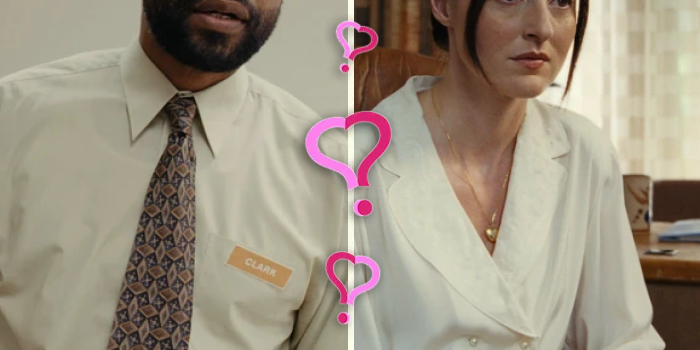
The film smartly refuses to be a straight adaptation of the myth. Instead it grounds the horror in an ordinary life: Clark, played by Chiwetel Ejiofor, runs a struggling furniture store and is coming apart in the specific, unglamorous way that people actually come apart. His therapist, Dr. Mary Kline, played by Renate Reinsve, listens to him describe an impossible place and has to decide, session by session, whether she is treating a delusion or documenting a discovery. That relationship is the spine of the movie, and it gives the yellow rooms something to mean.
Around them the film builds out a small, well-drawn ensemble. Mark Duplass plays Phil, whose easy friendliness never quite resolves into transparency. Lukita Maxwell plays Kat, whose instinct to record rather than run gives the film some of its best sequences. Finn Bennett plays Bobby, the character most likely to say out loud what the audience is thinking, which is usually some version of let us leave.
What makes the Backrooms genuinely unsettling, and what the film understands, is that the fear is architectural rather than monstrous. Liminal spaces are places built for transit and occupancy that you encounter empty: the mall after closing, the school in summer, the office at three in the morning. Your brain expects other people and does not find them, and the resulting dissonance registers as dread. The film leans on that mechanism hard, using long takes, wide lenses and sound design that turns an air-conditioning hum into a threat.
It also resists the usual horror obligation to explain itself. The rules of the space stay partial. Distances do not behave. Time inside does not map cleanly onto time outside. That ambiguity has kept audiences arguing about the ending for months, which is exactly the kind of afterlife a movie born on the internet was always going to have.
If slow-burn dread is your genre, try Which Weapons Character Are You? or Which Sinners Character Are You?. For more horror franchises, there is Which IT Character Are You? and Which Insidious: Out of the Further Character Are You?.