
Amelia Earhart: How Much Do You Actually Know?
Amelia Earhart: How Much Do You Actually Know?
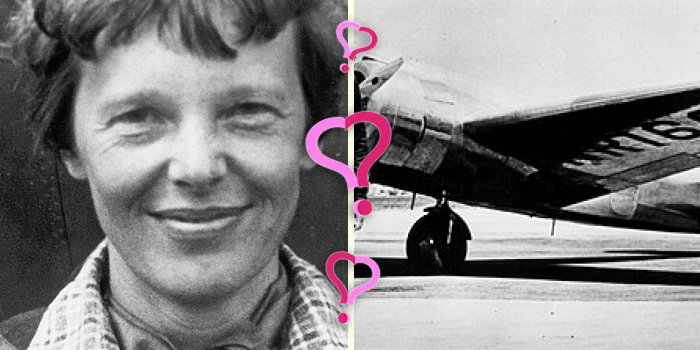
Learn More About Amelia Earhart
Amelia Earhart was born on July 24, 1897, in Atchison, Kansas, decades before commercial air travel existed and long before women were expected to have careers in aviation at all. She took her first airplane ride in 1920 and was instantly hooked, later saying that by the time the plane left the ground, she knew she had to fly. Within a few years she had earned her pilot's license and begun setting the records that would make her one of the most famous people in the world.
Earhart's first brush with transatlantic fame came in 1928, when she flew as a passenger aboard the Friendship, becoming the first woman to cross the Atlantic by air. She was quick to point out that she had done little more than ride along as cargo on that flight, and the comment stuck with her. Four years later, in May 1932, she fixed that imbalance for good, taking off from Newfoundland and landing in Ireland roughly fifteen hours later as the first woman to fly solo, nonstop across the Atlantic Ocean. The achievement earned her the Distinguished Flying Cross and cemented her as the most famous female aviator alive.
She didn't stop there. Earhart went on to become the first person to fly solo from Honolulu, Hawaii, to Oakland, California, the first person to fly solo nonstop coast-to-coast across the United States, and she set multiple speed and altitude records along the way, including a top speed of 181.18 miles per hour and an altitude record of 14,000 feet. She was also a founding member of the Ninety-Nines, an organization for female pilots that still exists today, and she used her fame to advocate for women in aviation and in careers more broadly.
In 1935, Purdue University appointed Earhart as a visiting faculty member and career counselor for women, and the university helped fund the aircraft that would carry her on her most ambitious journey yet: a twin-engine Lockheed Electra 10-E, built as what she called a flying laboratory. In 1937, with navigator Fred Noonan alongside her, Earhart set out to become the first person to fly around the world along its longest route, roughly 29,000 miles, following a course near the equator.
The flight was not without early trouble. An attempted takeoff from Luke Field in Honolulu on March 20, 1937, ended in a crash that forced Earhart to restart the entire journey. She and Noonan departed again from Miami on June 1, 1937, this time flying eastward, and made steady progress across Africa, the Middle East, South Asia, and Southeast Asia over the following month.
It was the final, most dangerous leg of the trip that ended in tragedy. On July 2, 1937, Earhart and Noonan took off from Lae, New Guinea, bound for tiny Howland Island, a speck of land in the middle of the Pacific Ocean roughly 2,227 nautical miles away. The U.S. Coast Guard cutter Itasca maintained sporadic radio contact as Earhart approached, receiving transmissions indicating she was low on fuel and struggling to locate the island. Contact was lost, and despite a massive two-week search authorized by President Franklin D. Roosevelt, neither Earhart, Noonan, nor their aircraft were ever found. The pair was officially declared lost at sea on July 19, 1937.
Nearly ninety years later, Earhart's disappearance remains one of the most enduring mysteries in aviation history, but her achievements as a pioneering aviator and advocate for women in flight are not in question. She proved, repeatedly and publicly, exactly what she set out to prove.