
Which The Good Place Character Are You?
Which The Good Place Character Are You?
Learn More About The Good Place
The Good Place spent four seasons pulling off one of the most audacious tricks in modern television: disguising a genuine philosophy course as a network sitcom. Created by Michael Schur, the show opens with Eleanor Shellstrop waking up in the afterlife, welcomed by the cheerful architect Michael into "the Good Place," a paradise reserved for history's most selfless people. The problem is immediate and delicious: Eleanor was, by her own admission, a selfish, dishonest person on Earth, and she's fairly sure she got in by mistake.
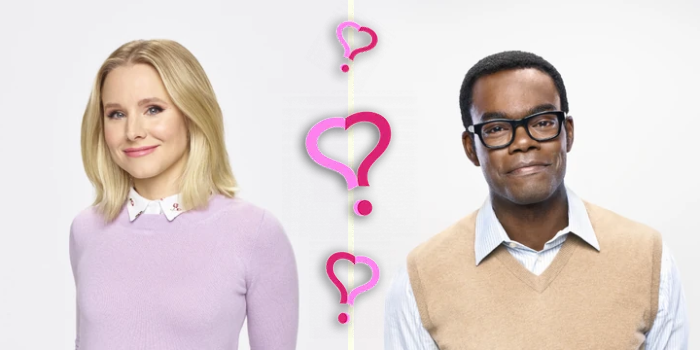
To avoid being found out and sent to "the Bad Place," Eleanor recruits her assigned soulmate, Chidi Anagonye, a brilliant but crippling indecisive moral philosophy professor, to secretly teach her ethics and turn her into a better person after the fact. Their unlikely partnership becomes the emotional core of the series, but the neighborhood around them is just as essential. Tahani Al-Jamil, a tall, glamorous British philanthropist obsessed with status and her sister's shadow, believes she belongs in the Good Place because of her charitable donations, even as the show slowly reveals how much of her generosity was actually about being seen. Jason Mendoza, a small-time Florida drug dealer and failed EDM DJ mistaken for a Buddhist monk, provides the show's chaotic comic energy while turning out to have a surprisingly big heart underneath his terrible decision-making.
And then there's Michael, the seemingly warm architect of the neighborhood, whose true nature the show reveals in one of television's most celebrated twists. Without spoiling exactly what happens, it's fair to say Michael's arc -- from utterly convinced of his own role to being forced to question everything he thought he understood about goodness -- mirrors the show's central question right alongside its human characters.
What makes The Good Place more than just a clever premise is how seriously it takes actual moral philosophy. Real ethical frameworks from Kant, Aristotle, and utilitarian thinkers get worked into the plot as genuine plot mechanics, not just window dressing, all in service of a show that ultimately argues something surprisingly sincere: that people can change, that moral perfection isn't the point, and that trying, together, matters more than getting it right the first time.
The show's structural ambition -- twist endings, entire timelines reset and rewritten, a genuinely satisfying series finale that stuck the landing where so many beloved shows have stumbled -- earned it a reputation as one of the smartest sitcoms of its era, one that rewards both casual watching and close philosophical attention in equal measure.
If clever, character-driven comedies with real emotional stakes are your thing, you might also enjoy discovering which Parks and Recreation character you'd be, or which Brooklyn Nine-Nine character matches your energy.
Beyond its philosophical ambitions, the show is also just remarkably well-constructed as comedy, with running gags, background sight gags, and a supporting cast of demons and afterlife bureaucrats that reward close, repeated viewing. Few sitcoms have managed to be this rewatchable while also genuinely earning tears in their final stretch.