
Which Ghostbusters Character Are You?
Which Ghostbusters Character Are You?
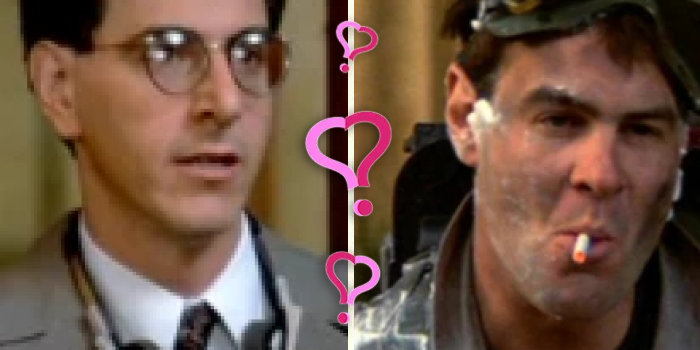
Learn More About Ghostbusters
Ghostbusters arrived in June 1984 and became the highest-grossing comedy of its era almost immediately, holding the record for years. What is easy to forget now is how unlikely it was. Dan Aykroyd wrote the original treatment as a sprawling, genuinely strange science-fiction epic involving multiple teams of ghostbusters traveling through dimensions. It was, by everyone's account including his own, unfilmable. Harold Ramis was brought in to rewrite, grounding the whole thing in present-day New York and turning it into a story about four guys starting a small business.
That decision is why the film still works. The premise is high-concept, but the comedy is entirely workplace comedy — cash flow problems, a skeptical regulator, a receptionist who has heard it all, three academics who have never had a real job. Bill Murray's Peter Venkman is the engine, and much of his best material is improvised; Ramis and Aykroyd wrote the structure and Murray filled it with a kind of amused detachment that nobody else could have supplied.
Aykroyd's interest in the paranormal was not a bit. He grew up in a family with a documented interest in spiritualism, his great-grandfather corresponded on the subject, and he has spoken about it seriously for decades. That sincerity is present in Ray Stantz, who Aykroyd plays as an unironic enthusiast — the one character who is delighted rather than terrified by what they find. The film's willingness to take its own mythology seriously, even while joking, is a big part of its texture.
Winston Zeddemore, played by Ernie Hudson, has a more complicated production history. The part was originally written much larger, with Winston joining from the beginning and playing a central role; budget pressures and rewrites reduced it substantially before filming. Hudson has discussed this openly over the years, and later installments — particularly Ghostbusters: Afterlife and Frozen Empire — have deliberately given Winston the expanded role the original promised, including making him the franchise's financial backbone.
The practical effects deserve their own mention. Slimer, the Stay Puft Marshmallow Man, the terror dogs, the library ghost — all of it was built, puppeteered, and composited by hand, mostly under Richard Edlund's supervision. The Stay Puft sequence in particular was achieved with a man in a suit shot against miniature New York streets, and its charm survives precisely because it looks handmade. Elmer Bernstein's score and Ray Parker Jr.'s inescapable theme song did the rest.
The franchise has had an uneven afterlife — a 1989 sequel, an animated series, a 2016 reboot, and the recent Spengler-family continuation films — but the original's cultural footprint is enormous. The logo is one of the most recognizable graphic marks of the twentieth century, the firehouse on North Moore Street is a permanent tourist stop, and the film's dialogue has been quoted continuously for forty years.
If you enjoy supernatural stories with a comic backbone, our Supernatural character quiz and Buffy the Vampire Slayer quiz both cover the monster-hunting-as-day-job territory. For a straighter scare, try our Conjuring: Last Rites quiz.
So which member of the crew are you — the closer, the believer, the brain, the realist, or the one actually answering the phone? Take the quiz above and find out.